Buying Advice For Towable Inflatables
When you're looking to add towables to your yacht toy inventory, it’s easy to get caught up in the excitement of high-speed turns and big splashes. However, from our experience working with crews and owners, the best days on the water are the ones that feel the most effortless and safe. Here is some friendly, professional advice to help you manage your new gear like a pro.
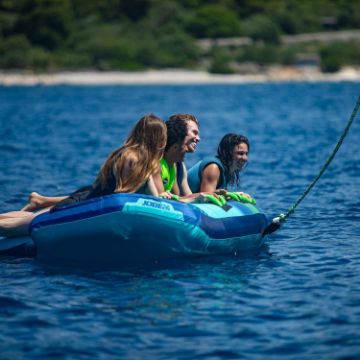
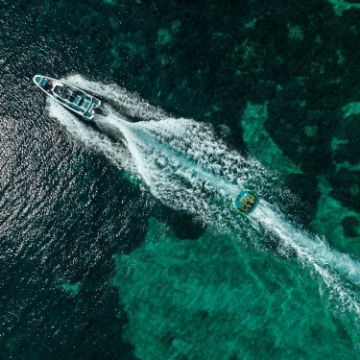
When operating any towable, having a dedicated spotter is not just a recommendation; it is a professional safety standard. The driver’s sole focus must remain on navigating the water and maintaining a clear path, while the spotter’s only job is to keep eyes on the guests and relay their hand signals. If a guest falls off, the spotter alerts the driver immediately so the vessel can be brought around safely and slowly. As a driver, whether in a tender or on a jet ski, always aim for smooth, predictable turns rather than erratic maneuvers. Abrupt changes in direction can cause the tube to whip across the wake at speeds much higher than the towing vessel, which can be disorienting or even dangerous for guests. Keeping your movements steady ensures the riders feel in control and allows them to enjoy the thrill without feeling at risk.
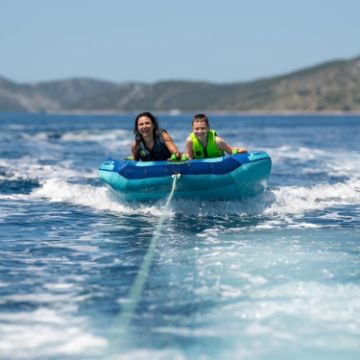
Towing behind a jet ski is a popular and agile option for many yacht crews, but it requires a specific understanding of physics. Because a jet ski is significantly lighter than a dedicated tender, you have to be mindful that "the tail can wag the dog." A large tube with two heavy adults can actually pull the back of a jet ski around during a turn, affecting your steering and stability. For this reason, we suggest limiting jet ski towing to single-person tubes for the best control. If you do choose to tow a two-person tube, keep the speeds low and the turns wide to ensure the weight of the riders doesn't overpower the jet ski’s maneuverability.
Managing the Riders
A common question we get asked is about who should be on the tube. For age limits, we usually suggest waiting until children are at least five or six years old. At this age, they generally have the grip strength to hold on independently and can understand the basic hand signals you’ll use from the tender.
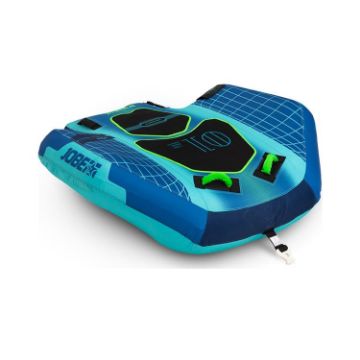
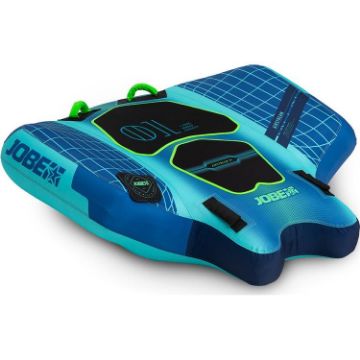
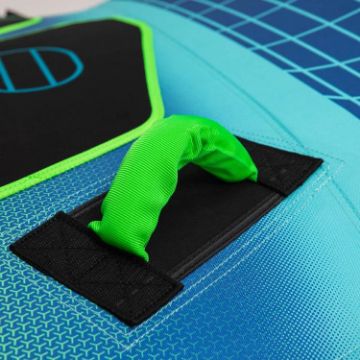
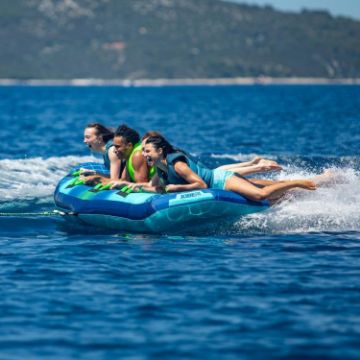
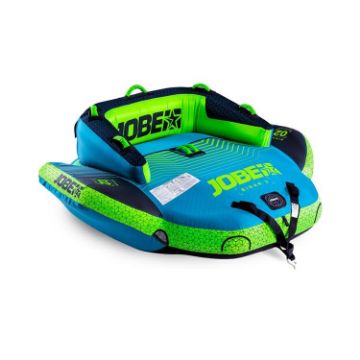
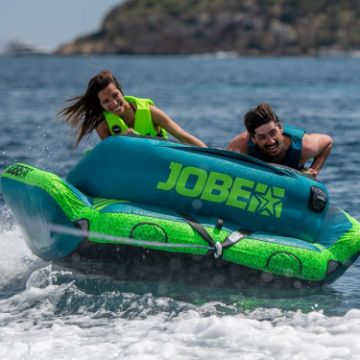
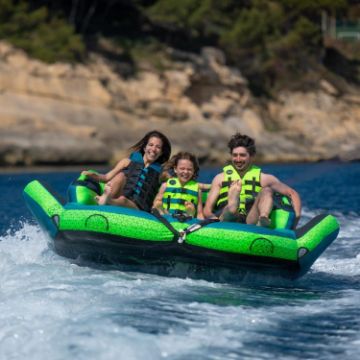
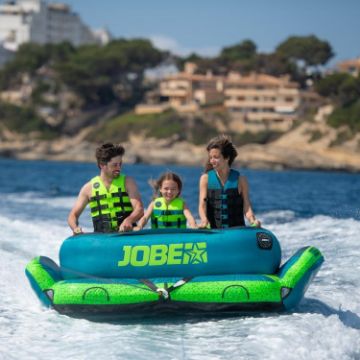
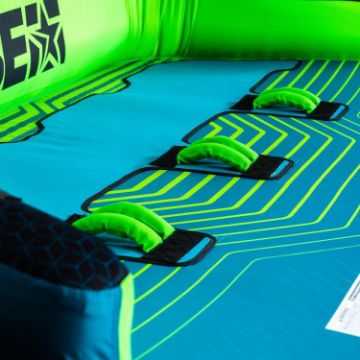
Weight limits are equally important, but not just for the tube’s buoyancy. An overloaded tube changes the towing dynamics significantly, causing the front to "submarine" during takeoff and put unnecessary strain on your tender’s tow point. We always recommend sticking strictly to the manufacturer's passenger count, even if the riders are small, because the handles and seating "cockpits" are specifically spaced to prevent guests from bumping into each other during the ride.
Guest Attire
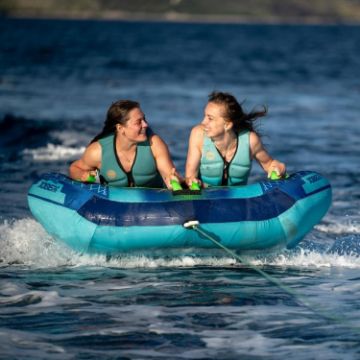
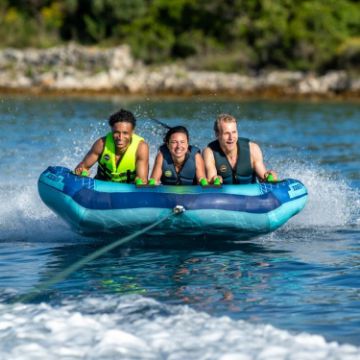
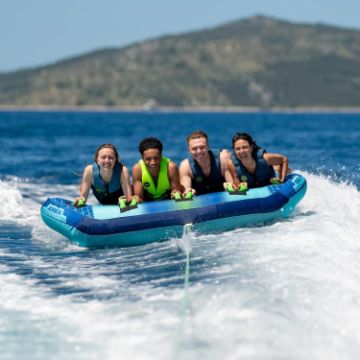
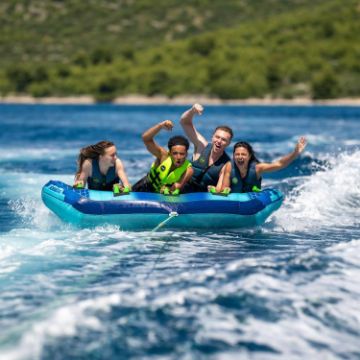
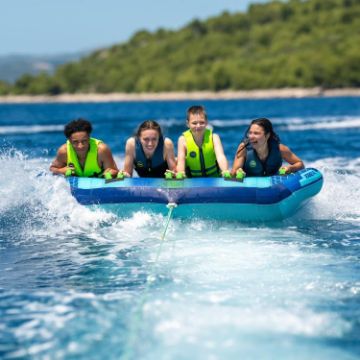
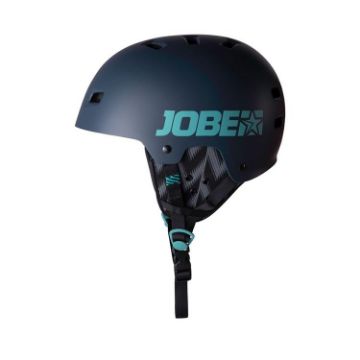
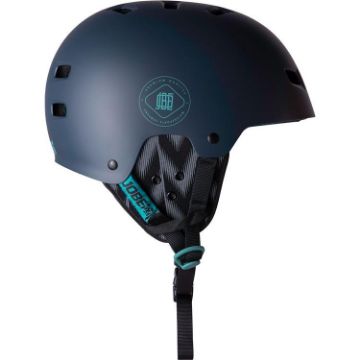
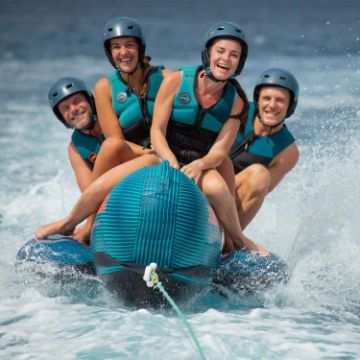
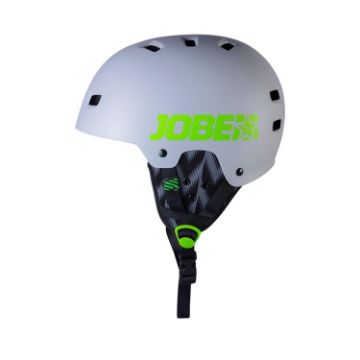
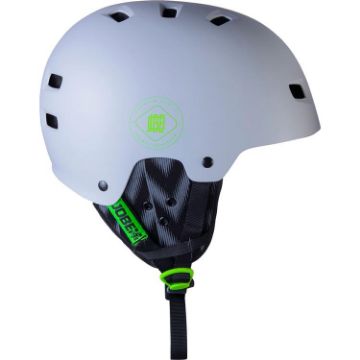
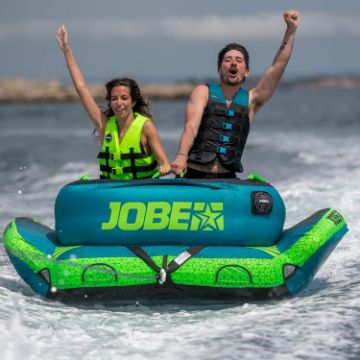
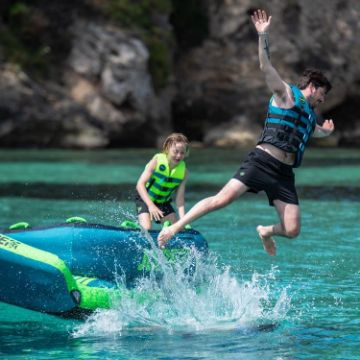
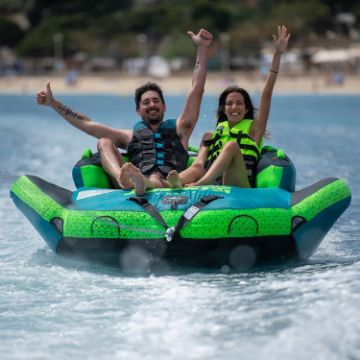
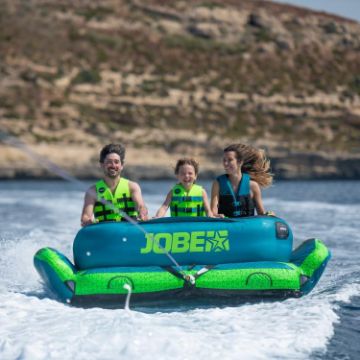
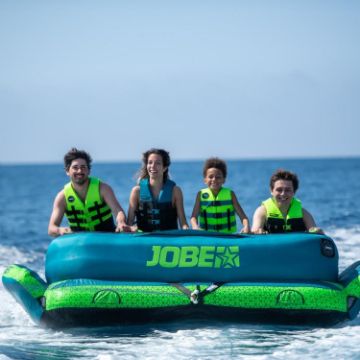
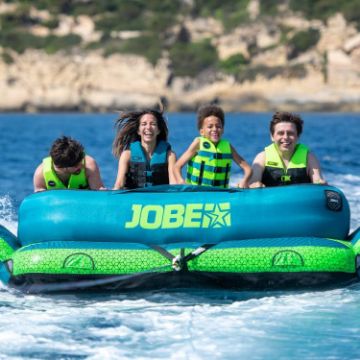
When it comes to guest attire, safety and comfort should always go hand-in-hand to maintain a professional standard on the water. Buoyancy aids are an absolute must for every rider, regardless of their swimming ability, as they provide essential flotation and impact protection during a fall. While helmets aren't always mandatory for casual towing, they are a very sensible addition for younger guests or when towing multiple riders, as they protect against accidental bumps between participants. We also highly recommend that guests wear shorty wetsuits or at least neoprene shorts and a rash guard. Beyond providing a bit of UV protection, these offer a vital layer of cushioning against the water's surface and prevent the "tube rash" or skin chafing that can occur during longer, more active salt water sessions. Providing these extras shows your guests that you’ve thought of every detail and care about their well-being.
Professional Safety Standards
Safety on a yacht is all about being prepared for the "what ifs." One of the most important rules to remember, and one that is actually a legal requirement in many Mediterranean and Caribbean hotspots, is the recovery rule. Your tow vehicle must have enough dedicated seats to safely recover every single person on the tube in case of problems. If you are towing a two-person tube, your tender needs space for the driver, an observer, and two guest seats. You never want to be in a situation where a tube deflates or a guest gets tired and you don't have a dry, secure spot for them to sit for the ride back to the boat.
Operational Best Practices
To keep things running smoothly, we suggest a quick "pre-flight" briefing with your guests. It builds a lot of confidence when they know exactly how to communicate with the crew. A simple thumbs-up for "faster," thumbs-down for "slower," and a hand on top of the head to signal "I’m okay" after a fall makes the experience feel much more professional and controlled.
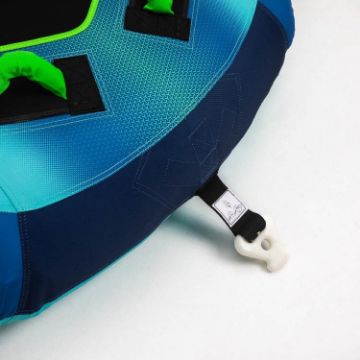
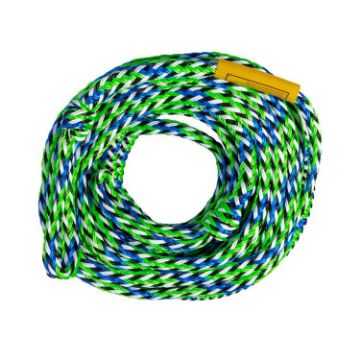
Lastly, keep a close eye on your equipment. Saltwater and UV are tough on gear, so a quick fresh-water rinse after the guests are done will keep the nylon covers looking brand new for the next charter. Check your tow ropes daily for any fraying; a clean, floating rope is your best friend for keeping guests safe and the tender’s propellers clear.
By keeping these simple points in mind, you’re not just giving your guests a ride,you’re giving them a premium, safe, and stress-free experience that matches the high standards of the rest of your vessel.